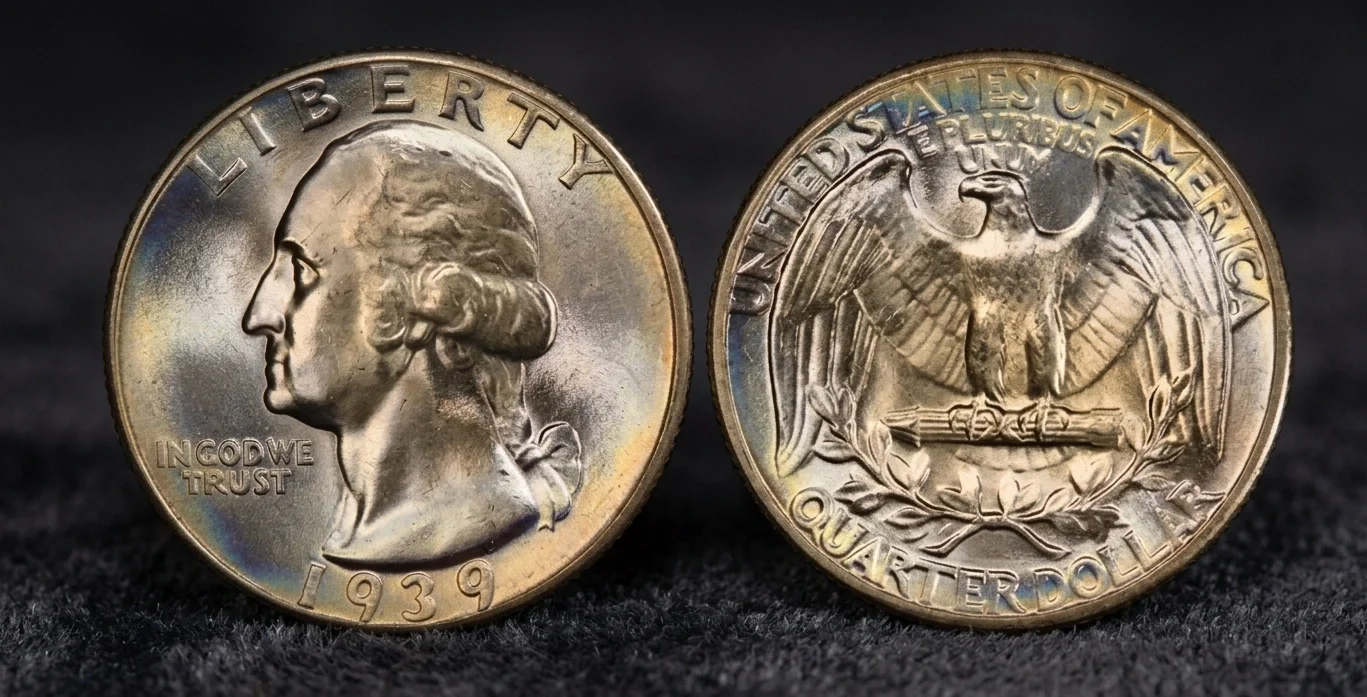
In 2006, the United States Mint released five coins within the "50 State Quarters" program, dedicated to Nevada, Nebraska, Colorado, North Dakota, and South Dakota.
The total mintage of all five issues exceeded 2.8 billion specimens, distributed between the Philadelphia (P) and Denver (D) mints.
Such a massive production volume makes these coins some of the most common items in circulation.
The myth regarding the high 2006 quarter value is based on an incorrect interpretation of circulation rarity.
Most specimens found in pocket change possess a value equal to their 25-cent face value.
Numismatic premiums arise exclusively in the presence of an exceptional state of preservation or confirmed minting errors.
State | Mintage (P) | Mintage (D) | Total |
Nevada | 280.200 | 309.200 | 589.400 |
Nebraska | 281.600 | 309.400 | 591.000 |
Colorado | 274.800 | 294.200 | 569.000 |
North Dakota | 305.800 | 359.000 | 664.800 |
South Dakota | 245.000 | 265.800 | 510.800 |
The Gap Between Face Value and Auction Records
Record prices for 2006 quarters are recorded only for specimens receiving an MS68 grade or higher on the Sheldon scale.
In 2017, at a Heritage auction, a 2006-D Nevada quarter specimen in MS68 condition was sold for 1,058 USD.
For comparison, a coin of the same issue in MS67 condition is valued on average between 15 and 25 USD.
The price drop when decreasing the grade by just one step amounts to over 4,000%.
This statistical fact confirms the lack of value for 99.9% of coins remaining in circulation.
Investors purchasing 2006 coins rely on PCGS and the free coin identifier app population reports, tracking the number of surviving top-tier specimens.
The presence of more than 100 confirmed specimens in a single grade leads to an annual price decrease of 5–10% due to supply saturation.
Errors as a Pricing Factor
Minting errors of 2006 remain the sole factor increasing the price of coins from circulation.
Among confirmed errors, off-center double strikes and striking on planchets intended for other denominations are encountered.
A 2006 Colorado quarter struck on a five-cent (nickel) planchet is valued on the market in the range of 400 to 800 USD.
The use of incorrect planchets occurs due to malfunctions in the metal feeding system of the presses.
Such specimens have a smaller diameter and do not contain the copper core visible on the edge.
The percentage of such errors appearing is less than 0.0001% of the total mintage volume.
Detecting an error requires verification of the coin's weight with an accuracy of hundredths of a gram.
Error Value Statistics
Off-center strike: 150–300 USD
Missing clad layer: 100–250 USD
Die crack without a catalog number: 5–15 USD
Silver Versions and Proof Sets
The San Francisco Mint (S) produced special versions of the quarters as part of Proof sets.
These coins are divided into copper-nickel and silver (90% silver) varieties.
The value of a 2006-S silver quarter in PR70 Deep Cameo grade fluctuates between 30 and 50 USD.
The investment value of these coins is limited by their high supply within sealed sets.
The annual price change for 2006 silver quarters correlates with the silver spot price by 85%.
The premium for Proof condition has remained stable over the last 15 years, showing no explosive growth.
Using protective capsules during storage prevents the appearance of patina, preserving the original mirror-like luster.
Details on the 2006 Nevada Issue
The Nevada issue features an image of three mustangs and remains a popular target for searching for micro-defects.
The price for a 2006-P Nevada coin in MS68 condition is approximately 500 USD, based on auction data from 2023.
The absence of mechanical damage on the horses' bodies remains a critical condition for obtaining a high grade.
Any scratch received during transportation moves the coin to the MS65 category with a value of less than 2 USD.
Statistics show that out of 10,000 checked coins, only one meets the MS67+ criteria.
This fact refutes claims of easy earnings through searching for valuable specimens in bank rolls.
Influence of Preservation on Long-Term Value
The 2006 coins were produced during a period of high-quality dies, resulting in a large number of MS65–MS66 specimens.
An excess of such coins on the market leads to an annual price drop of 2–3% relative to inflation.
Only coins in slabs (holders) with an MS68 grade demonstrate a price growth of 4% per year.
When analyzing the market, the cost of the grading procedure itself, amounting to approximately 30–50 USD per coin, must be considered.
Submitting a 10-dollar coin for expertise is an economically non-viable action.
Numismatists use a visual filtration method before sending coins for certification.
Using a coin checker app allows for identifying defects invisible to the naked eye.
Condition | Nevada (P) | Colorado (D) | South Dakota (P) |
MS64 | 0.25 | 0.25 | 0.25 |
MS66 | 3.00 | 4.00 | 5.00 |
MS67 | 18.00 | 22.00 | 25.00 |
MS68 | 450.00 | 850.00 | 600.00 |
Role of Mints in Pricing
Differences in mintage volumes between Denver and Philadelphia for 2006 are minimal.
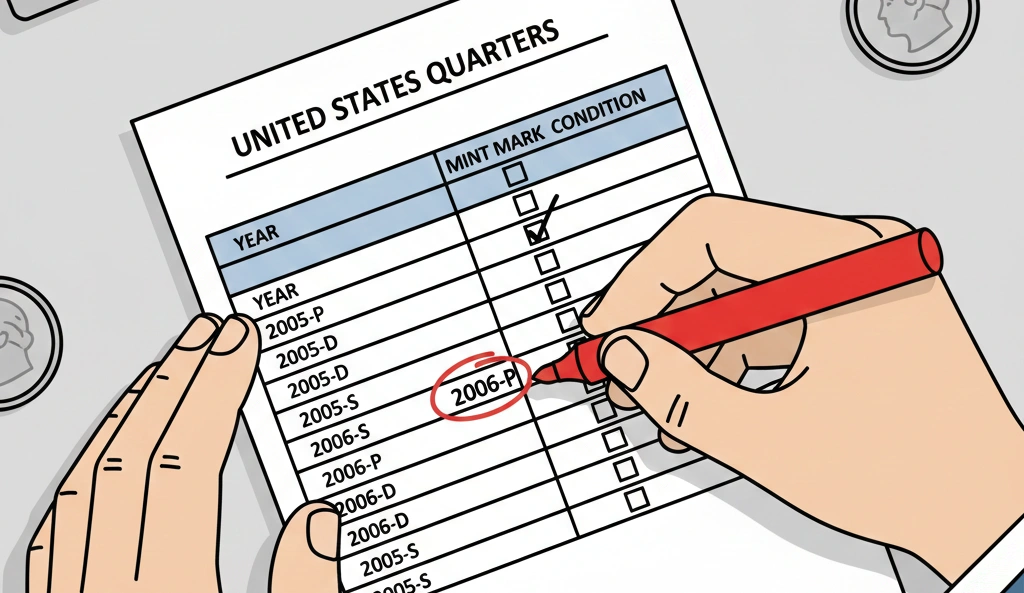
However, the technical condition of the equipment during the minting of a specific state influenced the clarity of details.
Denver (D) coins of that period traditionally possess a more pronounced luster than Philadelphia (P) issues.
This technological factor is considered by experts when assigning the "Satin Finish" attribute for special sets.
Satin Finish coins were released in limited quantities within annual Mint sets.
Their price in SP69 condition is approximately 10–15 USD, exceeding the value of standard coins by 40–60 times.
The absence of circulation remains a mandatory condition for preserving the matte field texture.
Features of the 2006 South Dakota Issue
The South Dakota quarter has the lowest mintage among all states in 2006.
The cumulative release was 510.8 million pieces, being 154 million less than North Dakota.
This 23% deficit relative to its neighbor does not lead to an automatic price increase for ordinary specimens.
The market reacts to rarity only upon reaching an MS68 grade.
For 2006-P South Dakota, sales at the level of 650 USD have been recorded for coins of the highest preservation.
Finding such coins is complicated by the high softness of the copper, facilitating the appearance of dents.
Storing coins in bags of 1,000 pieces leads to the destruction of the collective value of 98% of the mintage.
Authenticity Assessment and Market Risks
The spread of myths regarding the high value of ordinary quarters leads to an increase in attempts to artificially improve coin conditions.
Chemical polishing of the surface creates a false luster, easily identified by experts due to the absence of minting lines.
A coin subjected to cleaning loses its Mint State status and is valued at its face value.
Selling non-certified coins on online platforms is often accompanied by exaggerated expectations.
Statistics indicate that 95% of listings with "Rare 2006 Quarter" titles sell at a price not exceeding 1 USD.
Real investors ignore auctions lacking an authoritative PCGS/NGC conclusion.
So, the value of 2006 quarters is strictly tied to the quality indicators of the metal surface.
Billion-scale mintages guarantee the availability of coins for every individual.
The absence of rare die varieties in this year makes grading the only path to obtaining profit.
When analyzing assets, it is necessary to separate face value, metal price in silver versions, and numismatic premium.
Annual price dynamics for rare specimens show volatility within 10%, depending on the appearance of new finds in registries.
Understanding these factors eliminates errors when forming a collection or an investment portfolio.