Standard price lists often provide static figures failing to explain modern market shifts.
The actual 1939 quarter value depends on mintage figures, Sheldon scale grading, and specific mint errors.
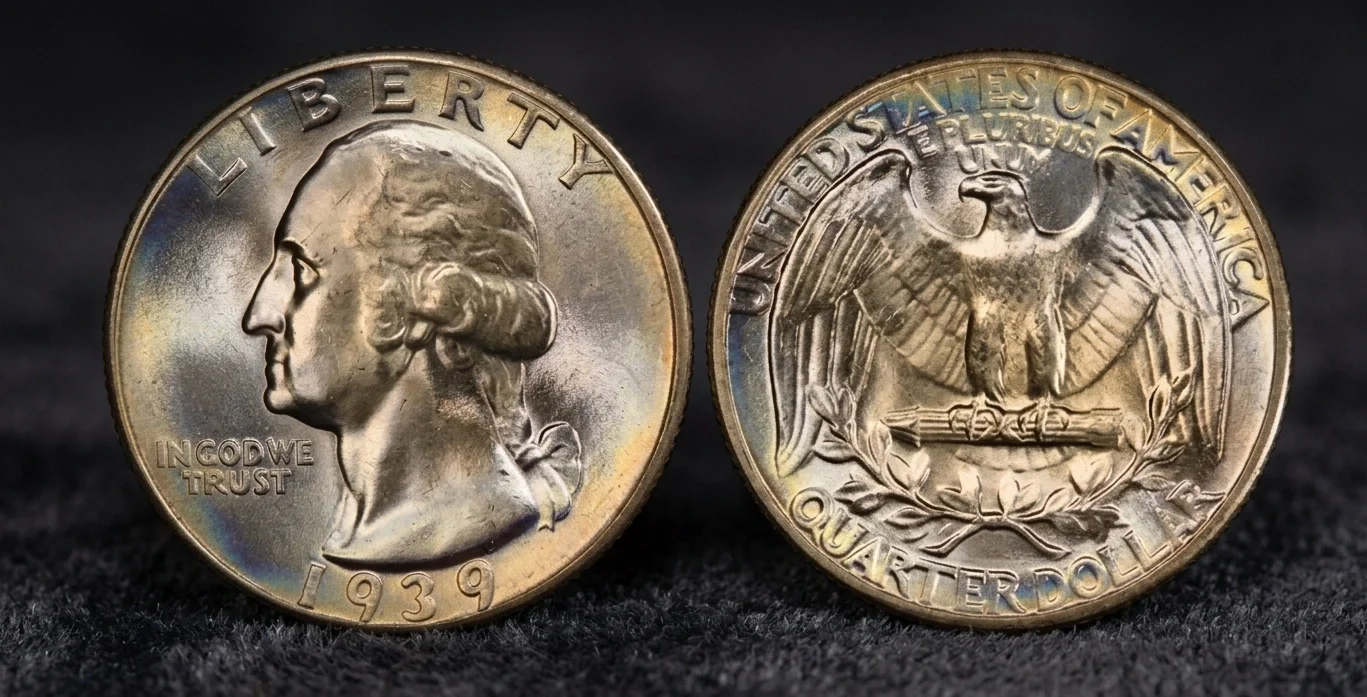
The 2026 numismatic market shows a strong preference for pre-war silver coins maintained in original condition.
Investors prioritize data verified by independent grading services, moving away from subjective eye appeal.
The United States Mint established specific standards for this 1939 silver issue.
Feature | Measurement |
Metal Mix | 90% Silver, 10% Copper |
Total Weight | 6.25 grams |
Silver Amount | 5.625 grams |
Coin Diameter | 24.3 millimeters |
Designer | John Flanagan |
Edge Type | Reeded |
1939 Mintage Breakdown
Total production reached 43,268,000 units, originating from three distinct facilities.
Philadelphia (No Mint Mark) — 33,540,000 coins
Denver (D Mark) — 7,092,000 coins
San Francisco (S Mark) — 2,636,000 coins
The low output from the San Francisco facility creates a natural scarcity directly impacting auction floor prices.
Pricing Mechanics
Price fluctuations for silver quarters stem from global metal spot prices combined with numismatic premiums.
Spot Silver Price → Establishing the absolute minimum value (Melting Price) MS65 Grade or Higher → Creating the primary jump in market desirability Mint Mark Rarity → Multiplying the price exponentially when moving from MS66 to MS67
Observing a 3–5% annual growth in rare specimen values, low-grade coins remain stagnant, tracking only the raw metal cost.
Philadelphia Issue Analysis (1939 No Mint Mark)
Coins lacking a mint mark represent the most common variety, serving as entry-level pieces for new buyers.
Most surviving examples remain in circulated condition, holding grades below AU50.
Price Milestones for Philadelphia:
VG8 – F12: $6 — $8
EF40 – AU50: $9 — $12
MS63: $22
MS65: $45
MS67: $450
Heritage Auctions recorded a significant sale in 2019.
A specimen graded MS68, displaying exceptional luster, sold for $3,120.
The lack of mechanical damage visible under a coin identifier places this coin in the investment asset category.
Detailed View: 1939-D Denver
Denver mintage being five times lower than Philadelphia results in a higher starting price point.
Starting at the MS64 level, 1939-D values begin significantly outperforming Philadelphia counterparts.
1939-D MS63 → $65 1939-D MS65 → $150 1939-D MS66 → $325 1939-D MS67 → $1,250
Die state plays a critical role in final valuation.
Weak strikes often found on central design elements lead to lower technical grades.
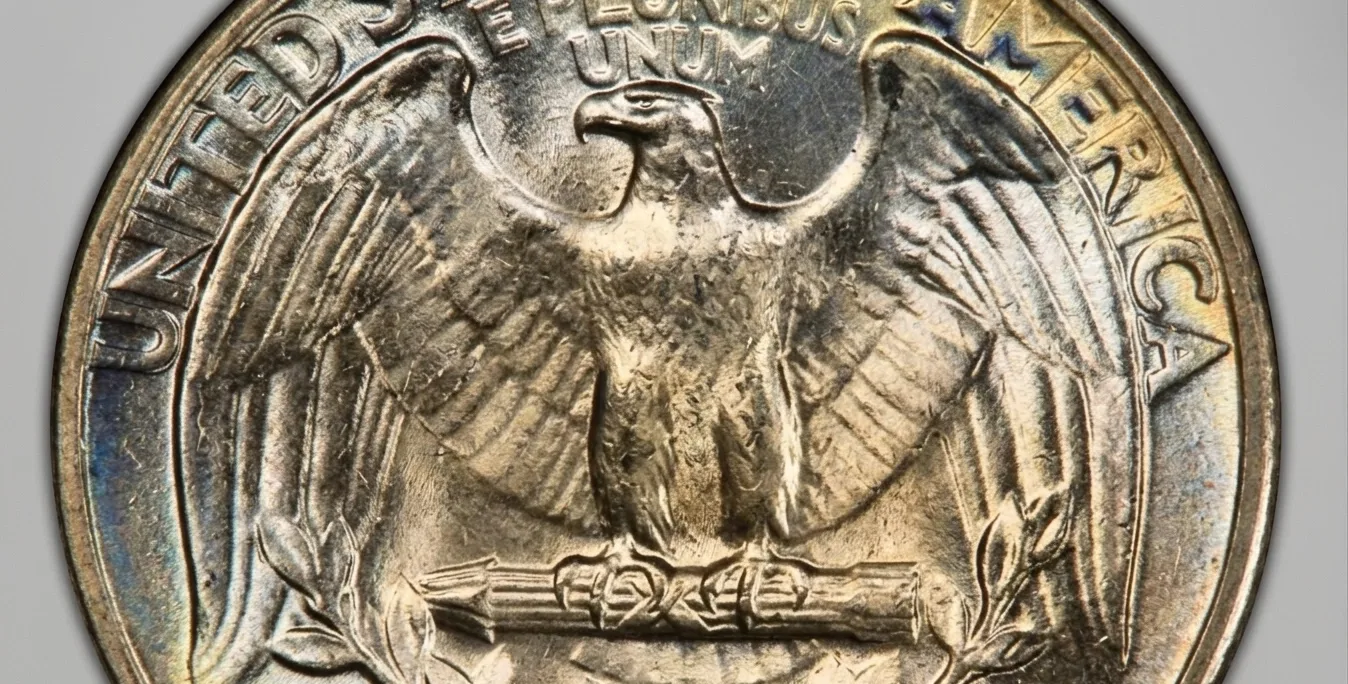
Clearly defined hair lines on Washington and eagle feathers increase the likelihood of achieving an MS67 rating.
San Francisco 1939-S Market Position
This issue ranks as the key date for the year due to its minimal production numbers.
The market experiences high volatility for specimens reaching the MS67+ threshold.
Auction Sale Statistics for 1939-S:
Condition | Average Price | 5-Year Change |
MS65 | $185 | +12% |
MS66 | $400 | +8% |
MS67 | $1,650 | +15% |
MS68 | $11,000+ | Stable |
The auction record for a 1939-S stands at $25,300.
This transaction occurred in 2014, confirming the coin's status among the most expensive 1930s quarters.
The high price resulted from perfect centering and a total lack of contact marks on the obverse.
Certification Impact on Final Sale
Professional verification by PCGS or coin finder remains a mandatory requirement for transactions exceeding $100.
Uncertified coins, frequently called "raw," trade at a 30–50% discount.
Identity Verification → Eliminating the risk of buying counterfeits Grade Assessment → Guaranteeing the coin matches its advertised state Protective Slab → Shielding the silver from oxidation and environmental damage
Patina on 1939 silver coins can either enhance or diminish value.
Rainbow toning appearing after long-term storage in original albums carries a premium over dull black surfaces.
Key Varieties and Minting Errors
Specific categories include coins featuring technical flaws occurring during the production process.
The year 1939 produced several notable varieties.
Double Die Reverse (DDR)
The doubling of elements on the back of the coin.
Most evident on the "QUARTER DOLLAR" and "E PLURIBUS UNUM" lettering.
An MS65 specimen with sharp DDR features can reach $500 or more.
Re-punched Mint Mark (RPM)
The D or S mint mark being struck twice by the mint worker.
Detected only under high magnification.
Adding 20% to 50% to the coin's value depending on the clarity of the error.
2026 Price Trend Mathematical Model
Analyzing the last decade of data reveals specific market behaviors.
Inflationary Pressure → Adding 2% annually to the base silver value MS64 Market Saturation → Decreasing prices by 1.5% yearly due to high supply MS67+ Scarcity → Increasing prices by 7–10% during periods of economic instability
Investment appeal remains exclusively within the top-tier preservation levels.
Circulated coins lose their status as collectible objects, becoming mere silver bullion investments.
Data reflects completed trades at major auction houses as of early 2026.
Mint | Grade | Sale Price | Date |
Philadelphia | MS68 | $3,120 | 2019 |
Denver | MS68 | $11,163 | 2012 |
San Francisco | MS68 | $25,300 | 2014 |
Philadelphia (Proof) | PR68 | $14,400 | 2021 |
Proof issues require separate consideration.
The mint produced only 13,520 mirror-like coins for collectors in 1939.
A PR65 specimen costs roughly $350, while PR68 examples reach five-figure sums.
Condition Assessment Protocol
Determining potential value requires following a strict set of steps.
Cleaning surfaces remains prohibited → Any mechanical rubbing drops the grade to "Details" Locating the mint mark under the eagle's tail → Identifying rarity Checking high points: Washington's cheek and eagle's breast → Searching for wear Using a 10x magnifying glass → Finding microscopic scratches
Finding cleaning marks, such as parallel micro-scratches, makes a coin ineligible for high-grade certification.
Such pieces are valued solely by their silver weight.